A practical guide
How to practice Stoicism every day
Begin the morning with a rehearsal
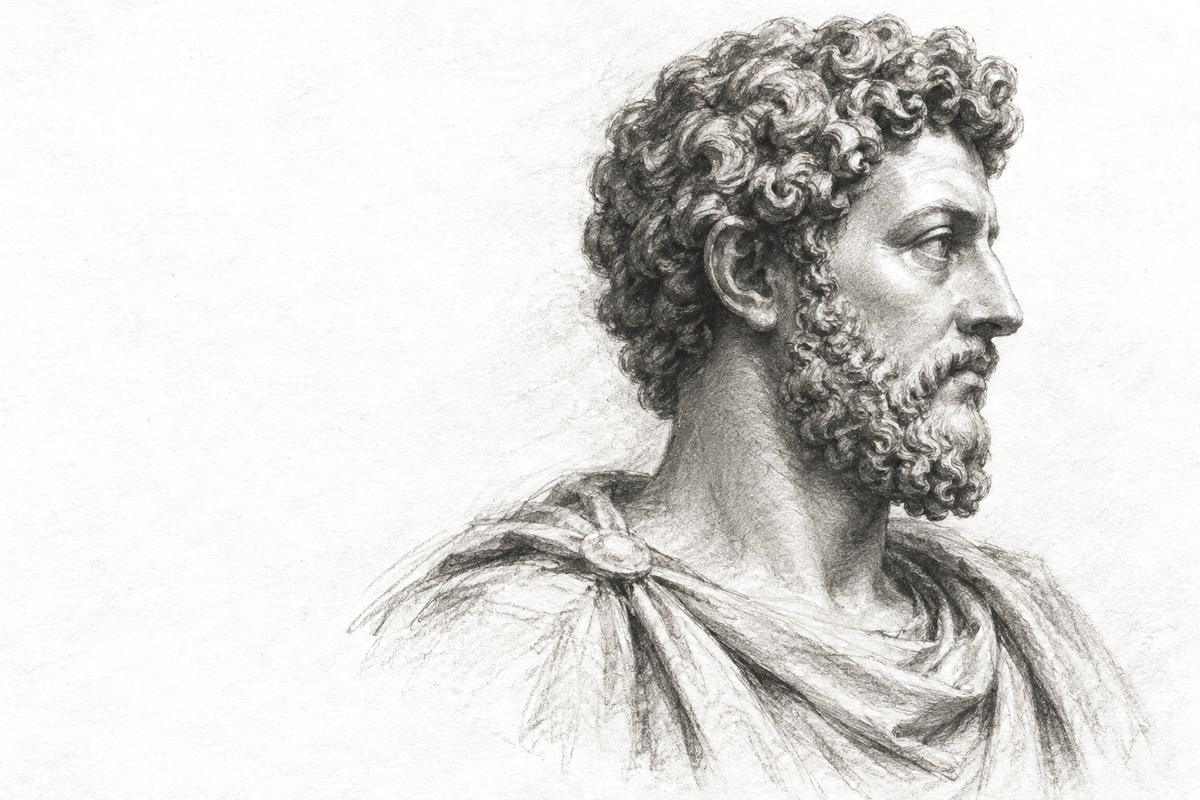
Marcus Aurelius opens the second book of the Meditations by naming the people he expects to meet that day.
“Begin the morning by saying to thyself, I shall meet with the busybody, the ungrateful, arrogant, deceitful, envious, unsocial. All these things happen to them by reason of their ignorance of what is good and evil.”
He names the difficulty before it arrives, and he gives himself a reason for it. You can do the same in a line: what could go wrong today, and how will you meet it? The guide to premeditatio malorum covers this habit in more detail.
During the day, ask whether it is up to you
When something goes wrong, sort it. Epictetus begins the Enchiridion with this question, and the modern name for it is the dichotomy of control. Name the trouble in a few words, then find the part that is yours to act on. Act on that part and let the rest be. The guide to the dichotomy of control goes through it step by step.
End the day with a review
Seneca, in Of Anger, describes what Sextius did when the day was over.
It was the custom of Sextius when the day was over, and he had betaken himself to rest, to inquire of his spirit: “What bad habit of yours have you cured to-day? what vice have you checked? in what respect are you better?”
The three questions, in the translator's words:
- What bad habit of yours have you cured to-day?
- What vice have you checked?
- In what respect are you better?
Answer each in a sentence. The aim is to see the day as it was, so the next one can be a little better.
Keep death in view
��Do not act as if thou wert going to live ten thousand years. Death hangs over thee. While thou livest, while it is in thy power, be good.”
“Let death and exile, and all other things which appear terrible, be daily before your eyes, but death chiefly; and you will never entertain an abject thought, nor too eagerly covet anything.”
One way to keep it in view is to count your time. A person who lives to 80 has about 4,160 weeks. Drawn as a grid, one square per week, the number becomes something you can see. Life in weeks explains the grid.
Name the week on Sunday
Once a week, as the week ends, give it a name in one line. Reading the names back later gives you a record of what your weeks were for.
How to practice it this week
- Write one line before the day: what could go wrong, and how you will meet it.
- When something troubles you, write what it is and mark the part that is up to you.
- In the evening, answer the three questions in a sentence each.
- On Sunday, name the week in one line.
Stoic journal prompts
- What could go wrong today, and how will I meet it?
- Is this up to me?
- What bad habit of yours have you cured to-day?
- What vice have you checked?
- In what respect are you better?
- What was this week for?
How Doctrine helps
Doctrine is a Stoic journal for iPhone built around this rhythm. Today shows one question before the day, and one line is enough. In the evening it asks Seneca's three questions. On Sunday it asks what the week was for, and the name stays on that week in a grid of your whole life. The lines you keep become your own book, one book for each year of your life.
Your writing stays on your phone. There is no account and no AI. There are no streaks, and a missed day carries no penalty.
Questions
How do I start practicing Stoicism?
Pick one habit and keep it for a week. Many people begin with the evening questions, because they take a few minutes and need only a page. Add the morning line once the first habit feels ordinary.
Do I need to read the Stoics before I begin?
No. The Enchiridion of Epictetus is short and opens with the idea most people start from. Marcus Aurelius wrote the Meditations in separate notes, so it can be read a page at a time.
What should a Stoic journal contain?
Whatever helps you see the day clearly: a line before the day, a note on what was and was not up to you, and your answers to the evening questions. One sentence is enough.
What if I miss a day?
Nothing is owed. Take up the next morning or evening where you are. A gap does not undo the practice.
Keep the practice, one week at a time.
Doctrine gives you a line each morning, Seneca's three questions each evening and a name for every week, on a grid of your whole life. For iPhone, seven days free.
Download on the App Store