Stoic ideas
The dichotomy of control
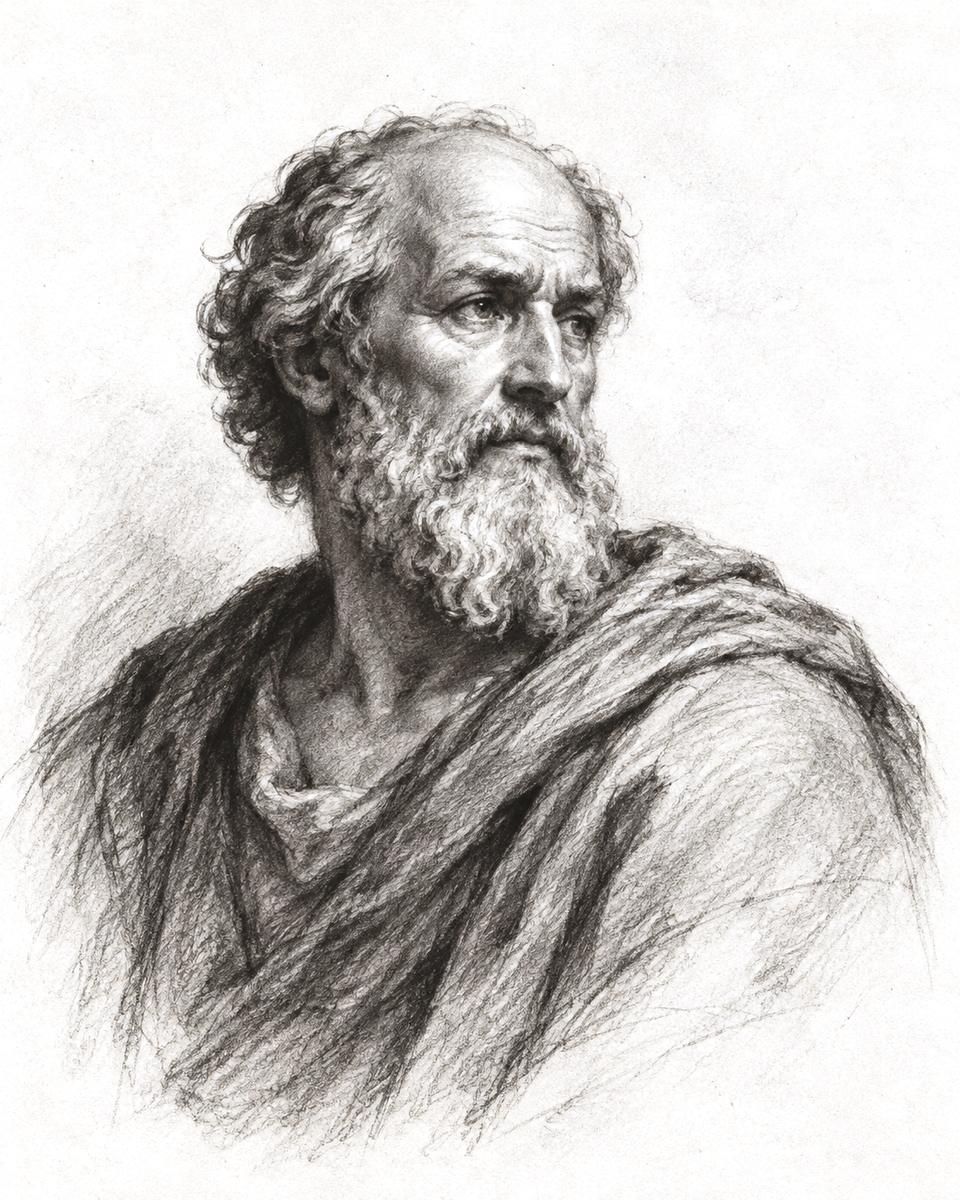
What Epictetus wrote
The Enchiridion, a short handbook of Epictetus' teaching, begins with a division.
“There are things which are within our power, and there are things which are beyond our power.”
He then says which things belong on each side.
“Within our power are opinion, aim, desire, aversion, and, in one word, whatever affairs are our own. Beyond our power are body, property, reputation, office, and, in one word, whatever are not properly our own affairs.”
The first list concerns your own judgment and choices. The second concerns the body, possessions and standing, which depend on other people and on events.
Why the division matters
Epictetus ties our disturbance to the views we take of things. Opinion is on the list of what is within our power, so it is a place to start.
“Men are disturbed not by things, but by the views which they take of things. Thus death is nothing terrible, else it would have appeared so to Socrates.”
Marcus Aurelius says the same thing in his own words.
“If thou art pained by any external thing, it is not this thing that disturbs thee, but thy own judgment about it. And it is in thy power to wipe out this judgment now.”
What it does not ask of you
It does not tell you to stop caring. Your preparation, your effort and your response are yours. The result depends on more than you, and the practice is to give your effort to the part you can act on.
How to practice it
- Write down what is troubling you in a sentence.
- Break it into pieces.
- Place each piece on one of two lists: within your power, or beyond it.
- Choose one piece from the first list and decide what you will do about it today.
- Look at the second list once, plainly, and leave it there.
Take a project that is running late. Within your power: the work you do this afternoon, a clear message to the people waiting, what you say when asked. Beyond your power: how the client reacts, and what others decide to think.
Pieces often move as you look at them. A manager's opinion of you belongs on the second list, and how you prepare for the review belongs on the first. A piece that seems to fit on both lists usually splits into two smaller ones, and each of those has a side.
How Doctrine helps
Doctrine has a screen for this called "Is it up to you?". You open it from the row "Something troubling you?" on Today. It shows the opening line of the Enchiridion and asks "What is troubling you?" You break the trouble into pieces and place each one under "Within your power" or "Beyond your power". An arrow beside a piece moves it to the other list.
The button at the bottom reads "Add your 2 to today" when two pieces are within your power, and "Done" when none are. The sorting is saved with that day, so you can read it again. Your writing stays on your phone, with no account and no AI.
Two other guides sit alongside this one: premeditatio malorum for the morning, and how to practice Stoicism every day for the whole rhythm. For a picture of how many weeks a life holds, see life in weeks.
Questions
What is the dichotomy of control?
It is a modern name for the idea that opens Epictetus' Enchiridion: some things are within our power and some are beyond it. The Stoic practice is to put your effort into the first kind and to meet the second with a steady judgment.
Did Epictetus use the phrase dichotomy of control?
The phrase is a modern label. Epictetus writes of things that are within our power and things that are beyond it.
Does it mean I should not care about results?
No. Your preparation, your effort and your response are yours. The result depends on more than you, so the practice is to give your effort to the part you can act on.
Where else does the idea appear in the Stoics?
Marcus Aurelius returns to it in the Meditations, for example in 6.52 and 8.47, where he writes about our judgments of things.
Keep the practice, one week at a time.
Doctrine gives you a line each morning, Seneca's three questions each evening and a name for every week, on a grid of your whole life. For iPhone, seven days free.
Download on the App Store